Salman Al-Farsi Garden in Madinah - History, Location & Visitor Guide
Salman Al-Farsi Garden is a peaceful and historic place in Madinah. Although it is not as widely known as some of the city’s other famous ziyarat locations, it carries a deeply meaningful story connected to Salman Al-Farsi (RA), one of the respected Companions of Prophet Muhammad ﷺ.
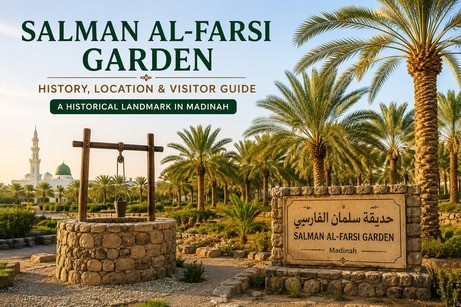
Located in the Al-Awali area of Madinah, the garden is a simple place surrounded by date palm trees and farmland. There are no large buildings or grand structures here, but the history behind this land makes it special for many visitors.
Who Was Salman Al-Farsi (RA)?
Salman Al-Farsi (RA) was originally from Persia, an area that is now part of Iran. He was born into a comfortable family, but from a young age, he searched for answers about faith and the truth.
Unlike many people who simply followed the beliefs around them, Salman wanted to discover the true path. His search took him through different lands, where he met religious scholars and learned from them. During these travels, he heard about the coming of the final Prophet and the signs that would identify him.
Among the signs Salman learned were:
- The final Prophet would live in a land known for its date palm trees.
- He would accept gifts but would not accept charity.
- He would have the Seal of Prophethood.
Driven by this knowledge, Salman continued his journey for many years. However, while travelling towards Arabia, he faced severe hardship. People he trusted betrayed him and sold him into slavery.
Eventually, Salman was brought to Yathrib, the city that later became known as Madinah.
Salman Al-Farsi (RA) Accepts Islam
When Prophet Muhammad ﷺ arrived in Madinah, Salman went to meet him. He wanted to confirm whether the signs he had learned about were true.
When he observed the Prophet ﷺ, he found that all the signs matched. With complete certainty, Salman accepted Islam.
However, despite becoming Muslim, Salman was still a slave and needed to gain his freedom. His journey was not over yet.
The Journey From Slavery to Freedom
At that time, a system known as mukatabah allowed enslaved people to earn their freedom by completing certain conditions set by their owners.
Salman’s owner placed two difficult conditions before him:
- He had to plant 300 date palm trees and ensure they grew successfully.
- He had to pay 40 uqiyyah of gold.
For Salman, completing these conditions alone seemed impossible. He had no wealth and no resources to fulfil them.
When Prophet Muhammad ﷺ learned about Salman’s situation, he decided to help him. The Companions collected young date palm plants and contributed whatever they could. Together, they gathered enough plants to complete the required number.
Salman prepared the land, and according to Islamic narrations, Prophet Muhammad ﷺ personally planted the trees. By the blessing of Allah, all the trees grew successfully.
The first condition was completed, but the payment of gold remained. Salman still had no means to fulfil this requirement. Prophet Muhammad ﷺ then provided him with gold, and when it was weighed, it was enough to complete the payment.
Through this support, Salman Al-Farsi (RA) finally gained his freedom.
This story is the reason the garden holds such importance today. It represents perseverance, faith, and the kindness shown by Prophet Muhammad ﷺ and the early Muslim community.
Life of Salman Al-Farsi (RA) After Freedom
After gaining his freedom, Salman became one of the respected members of the Muslim community in Madinah. People admired him for his knowledge, wisdom, and humility.
One of the most famous moments of his life came during the Battle of the Trench (Ghazwat Al-Khandaq). When a large army approached Madinah, Salman suggested digging a trench around the city as a defensive strategy. This idea was familiar in Persia but was new to the Arabs. Prophet Muhammad ﷺ accepted his suggestion, and the trench played an important role in protecting Madinah.
Even after gaining respect and importance, Salman continued living a simple life. He remained humble and dedicated himself to helping others.
Visiting Salman Al-Farsi Garden Today
Today, Salman Al-Farsi Garden remains a quiet and simple location. Visitors will mainly find date palm trees and a traditional farming environment rather than museums, displays, or large structures.
The importance of this place comes from its history. Understanding the story of Salman Al-Farsi (RA) before visiting makes the experience much more meaningful.
Many pilgrims include this garden in their Madinah ziyarat itinerary, often visiting it along with nearby historical locations such as Masjid Quba and Bir Ghars.
A typical visit usually takes around 20 to 30 minutes.
Location of Salman Al-Farsi Garden
The garden is located in the Al-Awali area of Madinah, approximately 5 to 6 kilometres from Masjid an-Nabawi.
Because it is close to Masjid Quba, many visitors combine both locations during the same trip. The surrounding area has a long agricultural history, and date palm farms can still be seen nearby.
How to Reach Salman Al-Farsi Garden
The easiest way to reach the garden is by taxi or private vehicle. From Masjid an-Nabawi, the journey usually takes around 10 to 15 minutes depending on traffic.
Walking is generally not recommended, especially during the hotter months, as the distance and weather conditions can make the journey difficult.
Many visitors choose private transport because it provides more comfort and flexibility. Families, elderly pilgrims, and groups can travel easily while visiting multiple ziyarat locations without being restricted by a fixed schedule.
For private transportation in Madinah, The Umrah Taxi provides hotel pickup and drop-off services for visitors who wish to explore Salman Al-Farsi Garden, Masjid Quba, and other important sites.
Nearby Places to Visit
Since Salman Al-Farsi Garden is located near several historical places, many pilgrims plan a combined ziyarat trip. Nearby locations include:
- Masjid Quba: One of the most famous mosques in Madinah and one of the closest major ziyarat sites.
- Bir Ghars: A historic well associated with Prophet Muhammad ﷺ.
- Masjid Qiblatain: The mosque connected with the change of the direction of prayer (Qiblah).
- The Seven Mosques: A group of historic mosques related to the Battle of the Trench.
What Visitors Can Expect
A visit to Salman Al-Farsi Garden is usually calm and peaceful. Since there are limited signs or information displays at the location, learning about its history before arriving can make the visit more valuable.
Visitors can expect:
- Beautiful date palm trees
- A traditional farming atmosphere
- A quiet environment away from busy areas
Best Time to Visit
Because the garden is an outdoor location, choosing the right time is important.
The most comfortable times to visit are:
- Early morning: When temperatures are cooler and the area is usually peaceful.
- Late afternoon after Asr prayer: When the weather becomes more pleasant.
During summer, it is better to avoid visiting around midday because temperatures can be extremely high.
Tips for Visitors
Before visiting Salman Al-Farsi Garden, keep these points in mind:
- Wear comfortable clothing suitable for Madinah’s weather.
- Maintain respectful behaviour, as you would at other Islamic historical locations.
- Keep the area clean.
- Avoid damaging plants or farming areas.
- Give extra time if travelling with elderly family members.
Important Facts About the Garden
- The date palm trees seen today are not necessarily the original trees from the time of Salman Al-Farsi (RA), as trees naturally require replacement over generations.
- Islamic narrations mention that Prophet Muhammad ﷺ planted 300 date palm trees to help Salman achieve his freedom.
- There is generally no entrance fee, but visitors should check current conditions before travelling.
- The garden is suitable for families, elderly visitors, and individual travellers.
Final Words
Salman Al-Farsi Garden may appear like a small and simple place, but its story gives it great historical and spiritual value. It reminds visitors of Salman Al-Farsi’s (RA) long search for truth, the difficulties he endured, and the support he received from Prophet Muhammad ﷺ and the Muslim community.
While it may not be among the largest attractions in Madinah, those who understand its history often find the visit meaningful and memorable.